If you're considering orthodontic treatment to straighten your teeth, you've likely come across two main options: traditional braces and clear aligners. Both are highly effective at correcting misalignment, but they differ significantly in appearance, comfort, lifestyle impact, and cost. Here's everything you need to know to make the right choice.
Understanding Traditional Braces
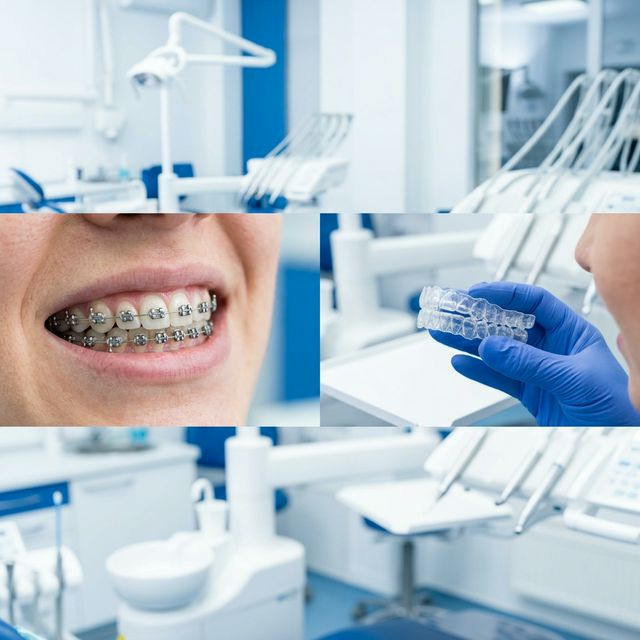
Traditional braces consist of metal brackets bonded to the front surface of your teeth, connected by a wire that your orthodontist periodically adjusts to guide teeth into their ideal positions. Modern braces are significantly smaller and more comfortable than older versions.
Today, you can also choose ceramic (tooth-coloured) braces that are far less noticeable than metal brackets, making them a popular option for adults who want a more discreet look while still benefiting from the reliability of traditional orthodontics.
Understanding Clear Aligners
Clear aligners are a series of custom-made, transparent plastic trays that fit snugly over your teeth. Each tray shifts your teeth slightly, and you progress through the series every 1–2 weeks. They're virtually invisible when worn and can be removed for eating, drinking, brushing, and flossing.
At The Dental Lounge, we use advanced digital 3D scanning and treatment planning software to create highly precise aligner sequences tailored to your unique dental anatomy. You can even preview your expected results before treatment begins.
Key Differences at a Glance
- Visibility: Aligners are nearly invisible; braces are visible (though ceramic options are more discreet).
- Removability: Aligners are removable; braces are fixed to your teeth throughout treatment.
- Comfort: Aligners are generally more comfortable with no sharp brackets or wires. Braces can cause soreness after adjustments.
- Diet: No food restrictions with aligners (you remove them to eat). Braces require avoiding hard, sticky, and crunchy foods.
- Effectiveness: Braces can handle more complex and severe cases. Aligners excel in mild to moderate misalignment.
- Compliance: Braces work 24/7 automatically. Aligners require 20–22 hours of daily wear — discipline is essential.
- Treatment Time: Both typically take 12–24 months, depending on complexity. Some mild cases with aligners can finish in 6 months.
"The 'best' option depends entirely on the individual patient. We perform a thorough digital analysis of your teeth and bite before recommending the approach that will deliver the most predictable, beautiful result."
Who Should Choose Braces?
Traditional braces are often the better choice if you have:
- Severe crowding or significant spacing issues.
- Complex bite problems such as deep overbite, crossbite, or open bite.
- Rotated or tilted teeth that require precise 3D movement.
- Younger patients (teens) who may struggle with aligner compliance.
Who Should Choose Aligners?
Clear aligners are an excellent choice if you:
- Value aesthetics and want a virtually invisible treatment.
- Have mild to moderate crowding, spacing, or alignment issues.
- Are disciplined enough to wear them 20–22 hours daily and switch trays on schedule.
- Want convenience — the ability to eat freely and maintain easier oral hygiene.
- Are an adult professional who prefers minimal impact on appearance during treatment.
Consultation Matters
The right choice depends on your specific dental anatomy, lifestyle, and goals. Always consult a specialist before deciding.
Both Work
Braces and aligners both deliver excellent results when prescribed appropriately and the treatment plan is followed carefully.
Ready to Straighten Your Smile?
Book a free orthodontic consultation to find out which option is right for you.